
As the dTHOR project came to an end with the final consortium and General Assembly last November 18th to 20th, we are happy to reflect on the conclusions and our contribution to the project!
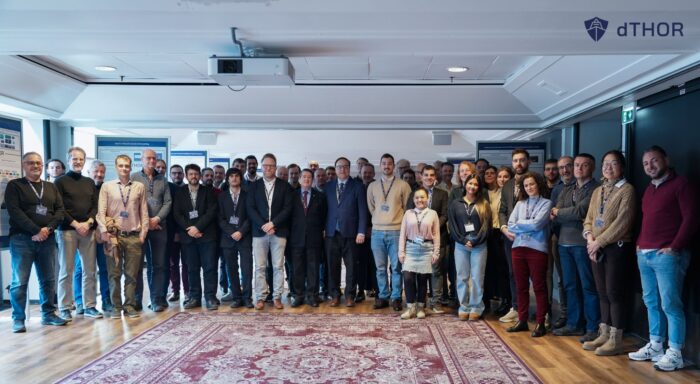
Project goal reminder: Funded by European defence and directed by the ministry of defence, dTHOR projects gathered 35 partners from the 11 different countries – aiming at defining the optimal data and information standards required to successfully deploy Digital Twins for military ships. A crucial initiative for revolutionizing how naval assets are managed, maintained and operated throughout their lifecycle.
Testia’s key role
Leveraging our decades of experience in Non-Destructive Testing (NDT) and structural integrity, Testia actively contributed to the following:
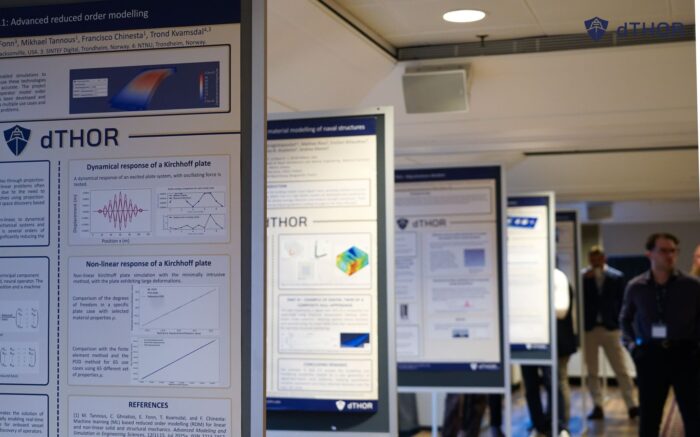
- Supporting the benchmarking efforts by providing insights into technologies that can be transferrable from aerospace to marine.
- Using this know-how to help identify appropriate sensor solutions, especially fiber optics, to nurture the next generation of Ship Structural Health Monitoring (SSHM) systems.
- Evaluated and tested python libraries for fatigue damage calculations and anomaly detection of time series data using marine datasets.
- Adapting the verification & validation principles from aerospace to marine in order to define system readiness.
Key learning & forward look
By taking part in the dTHOR consortium we have observed several transferable insights between the Aerospace and the Marine sectors. We strongly believe that learning from different industries positions us better as a provider of Structural Health Monitoring (SHM) solutions.
In the meantime, we are eagerly looking forward to our next SHM Academy session happening in December in our Bremen training facility! We can’t wait to welcome our next batch of participants to gain deep, hands-on expertise in the technologies that are revolutionizing the SHM industry.
To learn more about SHM Academy, please visit our dedicated page and stay tuned for updates on future dates and registration openings!